
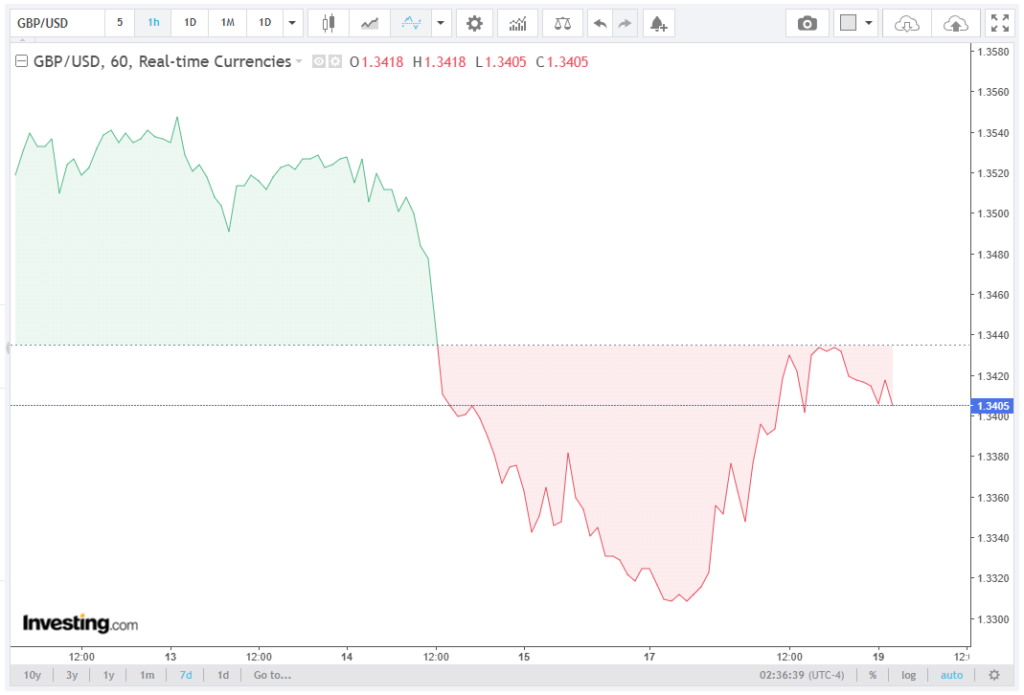
The British Pound (GBP) edged lower against the US Dollar (USD) on Tuesday, retreating from Monday’s highs near 1.3440 to test the 1.3400 area. The movement comes amid disappointing UK employment data, stronger wage inflation, and broader macro-financial factors affecting market sentiment.
Traders are weighing the implications for the Bank of England (BoE) and monitoring geopolitical developments impacting the US Dollar. Taurus Partners presents a detailed discussion of this topic through their brokers in this article.
GBP/USD Technical Dynamics
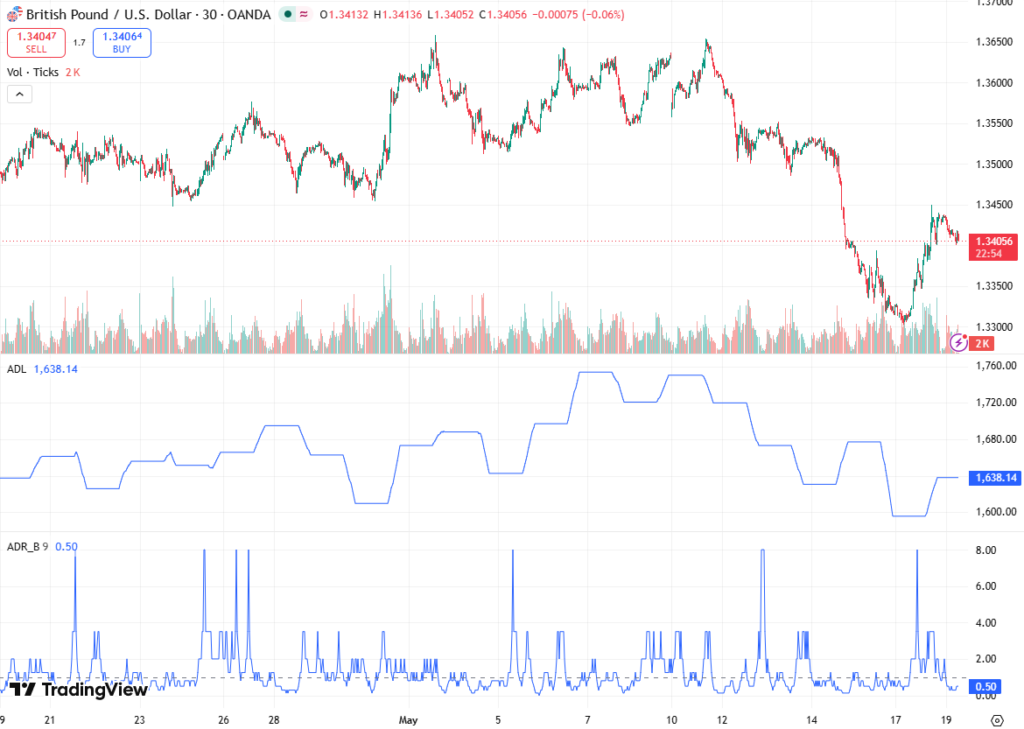
On Tuesday, the GBP/USD pair drifted closer to 1.3400, marking a notable shift from 1.3440 highs recorded on Monday. The Sterling appears sensitive to UK economic releases, particularly the labour market figures. A sustained break below the 1.3400 handle could open the door to further downside risk, while a recovery above 1.3440 may signal a resumption of short-term bullish momentum.
Technically, the pair’s intraday volatility has increased due to the juxtaposition of negative employment data against modest US Dollar weakness, creating a narrow but notable trading range for market participants.
UK Unemployment Data Exceeds Expectations
The UK Office for National Statistics (ONS) reported on Tuesday that the Unemployment Rate climbed to 5% in March, exceeding market expectations of a steady 4.9%. This unexpected rise in joblessness signals a softening in the labour market, adding downward pressure on the Sterling.
Additionally, the number of jobless benefit claimants increased by 26.5K in April, sharply higher than the 4.9K rise recorded in March. This surge underscores the fragility of the employment landscape and raises questions about the resilience of the UK economy amid ongoing inflationary pressures and global economic headwinds.
Wage Growth and Inflationary Pressures
In parallel with the rising Unemployment Rate, Average Earnings Including Bonus accelerated to 4.1% year-on-year for the three months to March, up from 3.9% in the previous period. This wage growth adds to the inflationary pressures that have been challenging the BoE’s monetary policy.
For policymakers, rising wages amid slowing employment create a dilemma: balancing the need to tame inflation while avoiding actions that could exacerbate labour market weakness. Investors are closely monitoring the BoE’s potential interest rate adjustments, as any tightening in the context of a deteriorating labour market could weigh further on the GBP/USD.
Political Uncertainty Adds Pressure
Beyond economic metrics, political instability in the UK continues to influence the British Pound. Prime Minister Keir Starmer is facing pressure following the Labour Party’s losses in recent local elections. The prospect of a leadership challenge from Greater Manchester Mayor Andy Burnham has added another layer of uncertainty.
While Burnham has sought to reassure markets by committing to fiscal discipline and adhering to government borrowing limits, investors remain cautious. Political risk is a known driver of currency volatility, and the combination of labour market softness and political instability reinforces a cautious stance toward GBP.
US Dollar and Geopolitical Influences
The US Dollar (USD) traded slightly softer on Tuesday, partly due to thin economic calendar activity and rising hopes of a peace deal in Iran. Market participants reacted to reports that US military actions were paused amid nuclear negotiations, pushing Oil prices and US Treasury yields down from recent peaks.
This environment has limited the safe-haven appeal of the USD, creating a reprieve for the GBP/USD pair. However, any sudden geopolitical shocks or shifts in US economic data could quickly reassert pressure on the pair, highlighting the ongoing interconnectedness of global currencies and risk sentiment.
Market Implications and Outlook
For traders and analysts, the combination of weaker UK employment data, rising wages, and political uncertainty creates a complex backdrop for the British Pound. The 1.3400 area represents a key support level, and sustained trading below this zone could indicate further downside potential toward 1.3350 or lower. Conversely, any technical rebound above 1.3440 may signal short-term recovery, especially if US Dollar weakness persists.
From a policy perspective, the BoE faces a delicate balancing act. The rise in wage inflation supports hawkish rhetoric, while rising unemployment urges caution. Investors and FX strategists are likely to monitor upcoming UK economic indicators closely, including Retail Sales, CPI data, and any BoE communications, to gauge the trajectory of GBP/USD.
Conclusion
The British Pound continues to grapple with economic and political headwinds, as evidenced by its decline toward 1.3400 against the US Dollar. Higher UK unemployment, coupled with rising wage growth, creates uncertainty for monetary policy and the currency outlook. Meanwhile, the US Dollar remains subdued due to geopolitical developments, offering temporary support to the Sterling.
In this environment, traders and investors are closely watching key technical levels, macro releases, and geopolitical events to navigate the GBP/USD pair, making it a critical focus for currency markets in the coming sessions.