
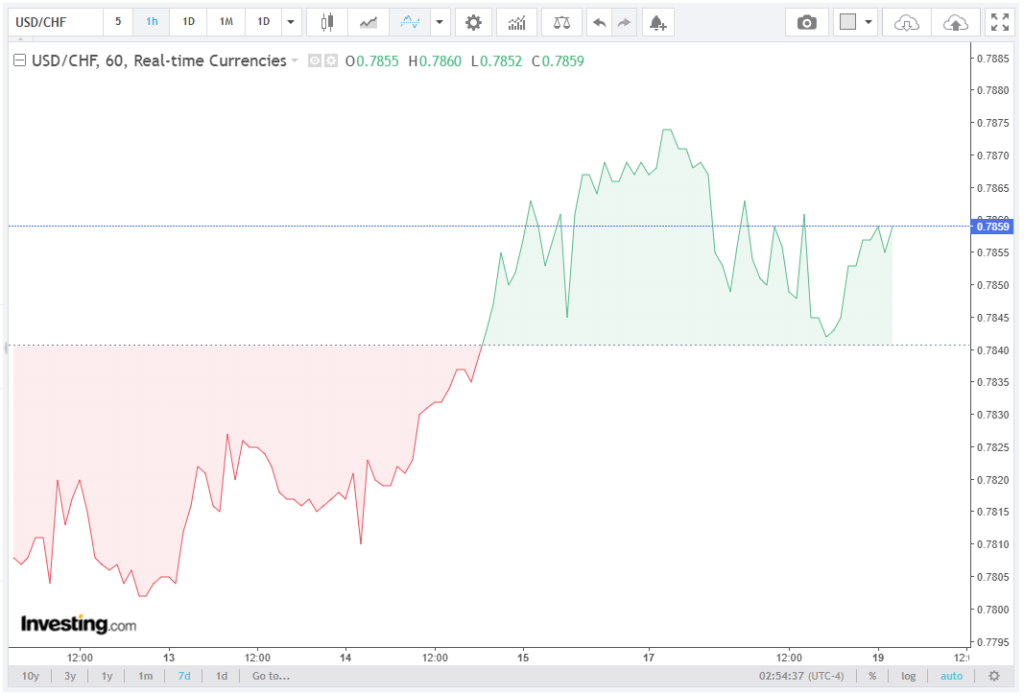
The Swiss Franc (CHF) weakened against the US Dollar (USD) on Tuesday as expectations of a more hawkish stance from the Federal Reserve (Fed) bolstered the Greenback. The USD/CHF pair recovered previous losses, trading around 0.7860 during Asian hours, reflecting market positioning around interest rate expectations, Treasury yields, and economic data from both the US and Switzerland.
Taurus Partners’ brokers shed light on this topic with a comprehensive guide in this article.
USD Strength Driven by Hawkish Fed Sentiment
The US Dollar gained support as market participants priced in the probability of further monetary tightening by the Fed. Futures markets indicate that the probability of a 25 basis point rate hike at the next Fed meeting now exceeds 75%, up from 62% a week ago. Elevated expectations for policy normalization have contributed to renewed buying in the USD, particularly against safe-haven currencies such as the CHF.
The 10-year US Treasury yield spiked to 4.659% in overnight trading, the highest level since February 2025, before settling at 4.601% by the Asian session. The 2-year yield also rose sharply to 5.218%, indicating a steepening of the short-term yield curve in anticipation of tighter monetary policy.
The surge in yields reflects concerns that core consumer price inflation, currently at 3.8% year-on-year, could accelerate due to sustained energy cost pressures, prompting further Fed rate adjustments.
In addition to headline inflation, market pricing incorporates expectations that PCE inflation will remain above the 2% target through at least mid-2026, keeping real yields on US government bonds attractive for foreign portfolio investors.
As a result, the USD has benefited from both a safe-haven bid and an improving carry advantage relative to the CHF, where short-term Swiss yields remain near 0.25%, reflecting the Swiss National Bank’s (SNB) accommodative policy.
Treasury Yields and USD/CHF Dynamics
The USD/CHF pair has shown a strong correlation with US Treasury yields over the past six months, with a correlation coefficient of 0.71 between 10-year yields and the USD/CHF spot rate. The overnight spike in the 10-year yield contributed to a 0.35% intraday appreciation in USD/CHF, reversing losses from the previous day when the pair fell to 0.7835.
The yield differential between the 10-year US Treasury and the 10-year Swiss Confederation bond, currently at 4.50%, favors the USD, reinforcing the currency’s appeal to carry traders. The differential has widened from 4.15% at the start of the year, highlighting the relative attractiveness of US debt instruments and exerting further pressure on the CHF.
Swiss Economic Recovery Provides Limited Support
While the Swiss Franc faces headwinds from the USD, the domestic economy shows signs of resilience. Flash estimates indicate that Swiss GDP grew 0.5% quarter-on-quarter (QoQ) in Q1 2026, up from 0.2% QoQ in Q4 2025, representing the fastest quarterly growth rate in the past twelve months. On an annualized basis, Swiss GDP expanded 2.0% YoY, driven by robust industrial output (+1.1% QoQ) and a rebound in private consumption (+0.8% QoQ).
The recovery has been supported by strong exports, which grew 3.5% YoY, primarily due to increased demand for pharmaceuticals and precision machinery, offsetting slower financial sector activity.
Despite this positive growth trajectory, the SNB has maintained ultra-low policy rates and continues to intervene in the foreign exchange market to prevent excessive CHF appreciation, which could undermine export competitiveness.
Geopolitical and Market Sentiment Impacts
Market sentiment also influenced the USD/CHF dynamic. Elevated geopolitical tensions initially boosted demand for safe-haven assets, but a temporary easing in risk premia following the postponement of military actions allowed the USD to retain its strength.
Volatility indices such as the VIX fell to 16.8 from 19.5 the previous day, contributing to a short-term reduction in risk-off flows, yet the underlying trend remains tilted toward a stronger USD.
Outlook and Market Implications
The USD/CHF outlook in the near term will be closely linked to US monetary policy expectations, Treasury yield movements, and the evolution of Swiss economic indicators. The current yield differential favors the USD, while the ongoing Swiss recovery may provide a stabilizing floor for the CHF, limiting extreme depreciation.
Traders are likely to monitor upcoming US CPI and PCE data, which will offer insight into potential Fed rate adjustments. Additionally, the release of Swiss industrial production and export data will influence the CHF’s medium-term trajectory, although the low interest rate environment in Switzerland continues to constrain its currency appreciation potential.
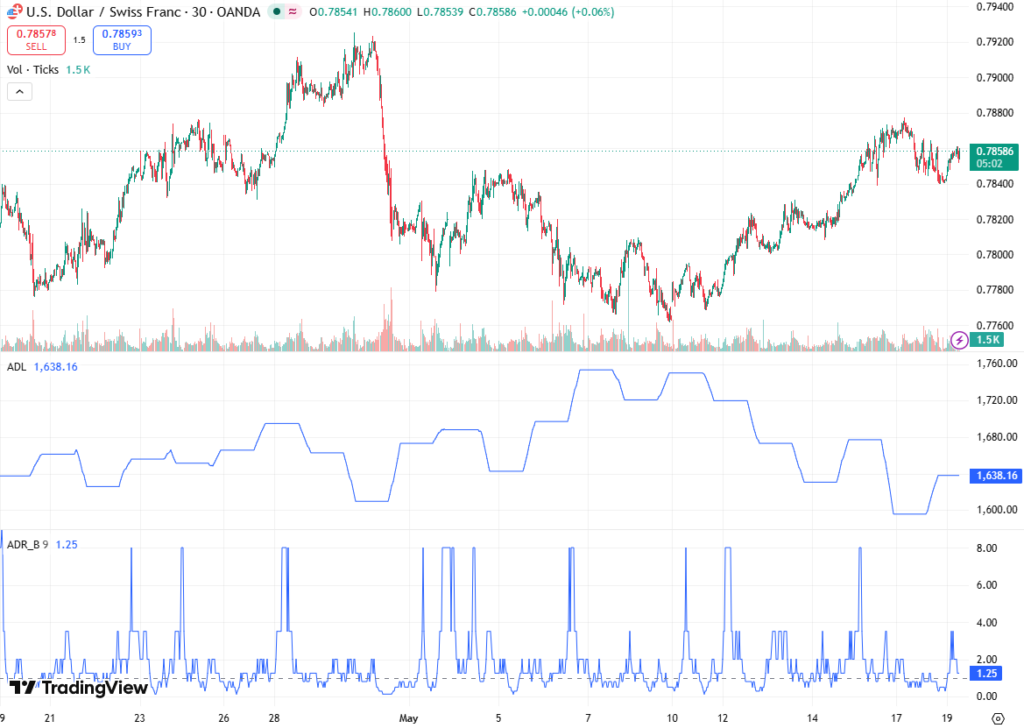
Overall, technical indicators suggest a bullish bias for USD/CHF, with key levels to watch at 0.7820 on the downside and 0.7900 on the upside. Any shifts in inflation expectations, monetary policy guidance, or geopolitical risk are likely to produce significant short-term volatility in USD/CHF trading.