
West Texas Intermediate (WTI) crude oil extended gains for the fourth consecutive session, trading around $102.20 per barrel during Asian trading hours. The market remains supported by geopolitical uncertainty, but the recent pause in a planned military strike on Iran has introduced a potential moderating factor for prices.
Despite this, analysts expect WTI volatility to persist, given the strategic significance of the Strait of Hormuz, which handles roughly 21 million barrels per day (bpd), or approximately 20% of global seaborne oil trade. This article by Taurus Partners offers a full breakdown of the subject matter.
Geopolitical Developments and Market Implications
A planned military operation targeting Iran was temporarily suspended following diplomatic appeals from Gulf Cooperation Council (GCC) member states. The suspension comes as serious negotiations continue regarding Iran’s nuclear program and regional influence. However, the risk of a full-scale military escalation remains significant, providing upside support to crude prices.
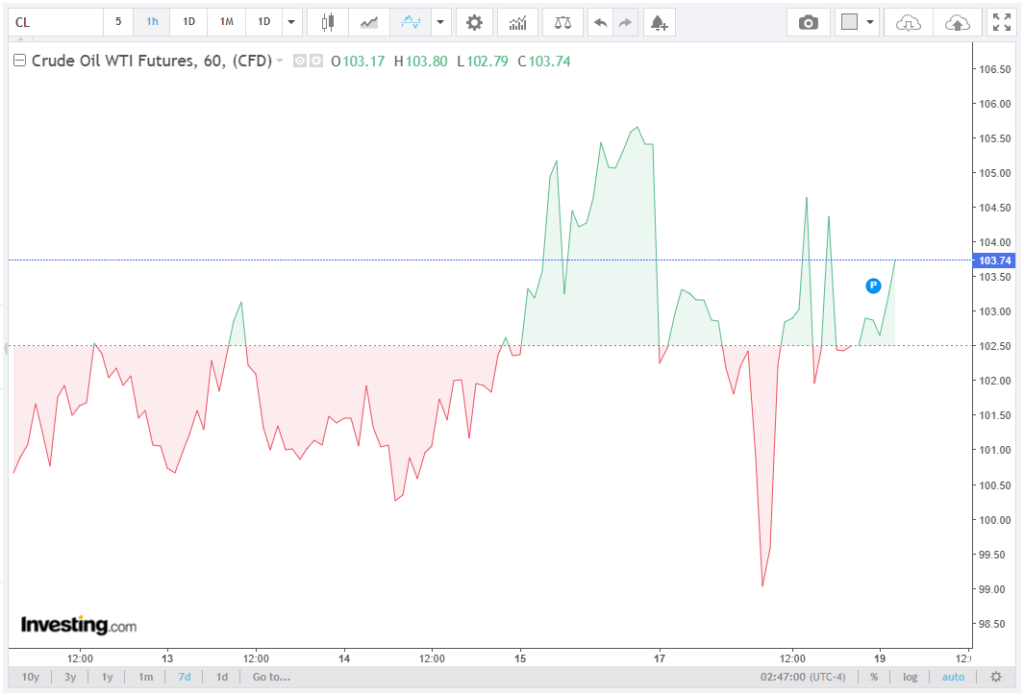
The WTI market had already experienced elevated volatility in the past week, driven by stalled negotiations and reports of near-complete disruption in shipping through the Strait of Hormuz. This period saw WTI prices surge from $97.50 to over $101 per barrel, representing a 4% increase in less than seven trading days.
With the immediate threat of military action reduced, short-term price moderation may occur, but structural supply concerns continue to underpin WTI strength. The market is closely monitoring diplomatic progress and the possibility of renewed escalations, which could reverse any temporary softening in prices.
WTI Technical Analysis
WTI crude oil futures have traded in a narrow range between $101.50 and $102.50 per barrel over the past 24 hours. Open interest in front-month WTI contracts has risen by approximately 2.1%, suggesting increasing speculative positioning amid geopolitical uncertainty.
From a technical perspective, support levels are identified at $100.80 and $99.50 per barrel, while resistance is near $103.00 per barrel. The Relative Strength Index (RSI) is currently around 63, indicating moderate bullish momentum, but not yet in overbought territory.
Fundamental drivers include inventory reports, Middle East shipping risks, and global crude demand projections. Market participants are analyzing EIA weekly crude stock data, which recently indicated a draw of 3.1 million barrels, reinforcing upward price momentum despite easing immediate geopolitical risks.
Middle East Supply Considerations
Before the pause in military action, oil prices had been rallying due to the risk of a near-total blockade of the Strait of Hormuz. Iran’s nuclear program and the dual blockade of this strategic waterway have been persistent supply-side risk factors.
Approximately 21 million barrels of oil per day pass through the Strait, including 8.5 million barrels destined for Asian markets, making any disruption a critical factor in global energy markets. Even a partial closure could reduce world oil supply by 5-7%, triggering sharp price spikes.
Although the temporary de-escalation may reduce immediate risk premiums, analysts caution that WTI remains highly sensitive to Middle East developments. Historical data suggests that even minor disruptions in the Strait can lead to 5-8% short-term price swings, emphasizing the market’s structural vulnerability.
Market Outlook
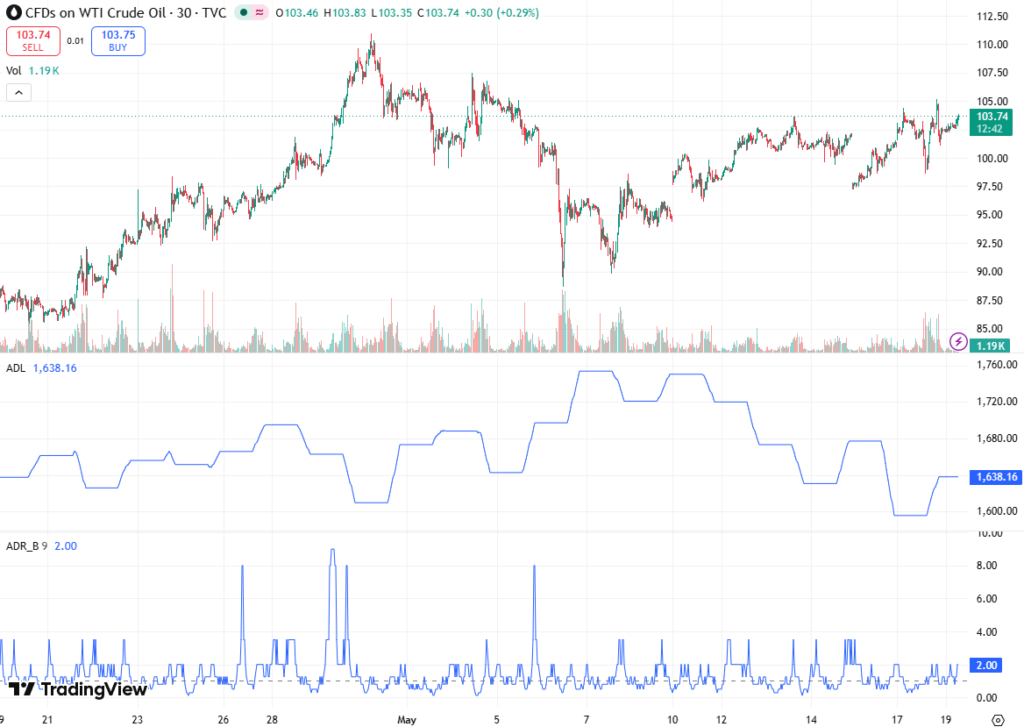
The WTI market faces a dual scenario. On the upside, potential military escalation or renewed disruptions in the Strait of Hormuz could drive prices higher, with analysts estimating that a complete blockage might push WTI toward $110 per barrel within days.
On the downside, successful negotiations and easing geopolitical tensions could reduce the risk premium in WTI prices by approximately $2–3 per barrel.
From a quantitative standpoint, volatility indicators (VIX for oil) have remained elevated at 28.5, compared to a 3-month average of 22.3, reflecting market uncertainty. Futures spreads suggest that contango in the WTI curve is modest at $0.80 per barrel between July and December contracts, indicating moderate near-term bullish sentiment.
Investors and analysts are also monitoring OECD crude inventories, which remain slightly below the 5-year average by 15 million barrels, reinforcing tight supply conditions even as geopolitical tensions temporarily ease.
Conclusion
WTI crude oil remains resilient, trading near $102 per barrel, supported by the structural risk of Middle East supply disruptions and elevated global crude demand expectations. While the pause in planned military action reduces immediate upward pressure, the market remains sensitive to geopolitical signals, with volatility likely to persist.
Emerging markets, including India, are already responding to high crude costs through fuel price adjustments, highlighting the broader economic impact of sustained WTI strength. Analysts caution that WTI could either consolidate near current levels or experience sharp directional shifts, depending on the outcome of ongoing negotiations and regional energy security developments.
Traders are advised to monitor support at $100.80 and $99.50 and resistance near $103, while considering inventory data, futures positioning, and Middle East developments as primary price drivers in the coming weeks.