
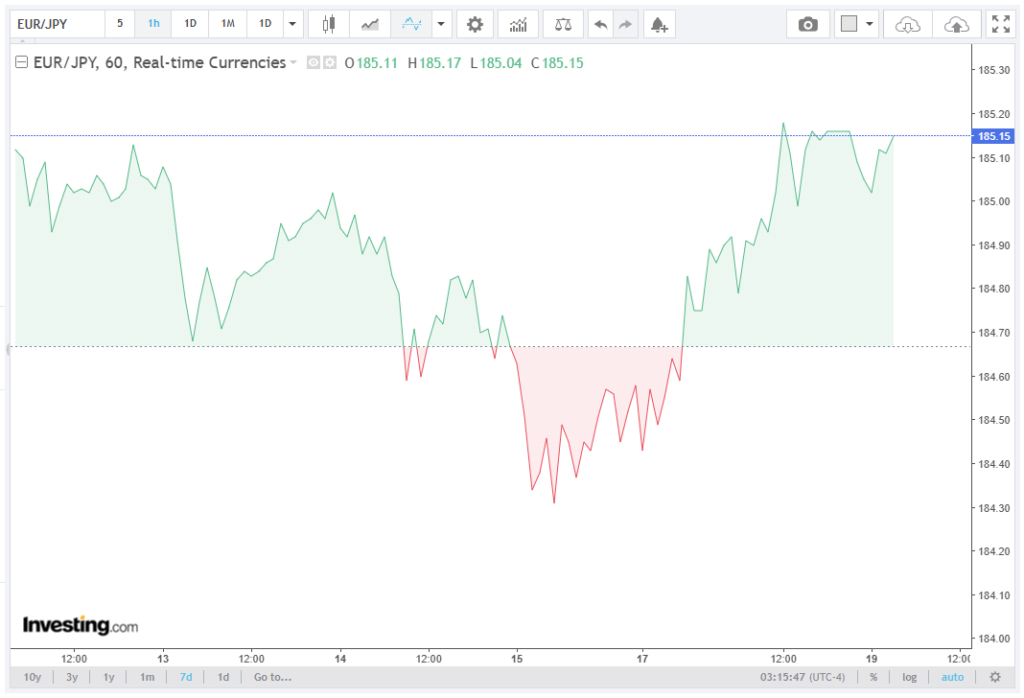
The EUR/JPY currency pair has exhibited renewed weakness, trading around 185.10 during Asian hours on Tuesday after modest gains in the prior session. The decline reflects a combination of Euro depreciation amid heightened geopolitical risk and cautious optimism around European Central Bank (ECB) monetary policy. Explore this topic in depth with the brokers at Taurus Partners, as detailed in their article.
Euro Faces Downside Pressure from Geopolitical Risk
The Euro (EUR) has underperformed against the Japanese Yen (JPY) as uncertainty in the Middle East, particularly surrounding Iran, continues to affect investor sentiment. Historically, geopolitical instability tends to boost demand for safe-haven currencies such as the JPY, though the current environment has kept flows moderate.
The EUR/JPY cross remains sensitive to changes in risk perception, with volatility expected to remain elevated as developments unfold.
In addition to geopolitical factors, underlying Eurozone fundamentals contribute to the currency’s limited upside. Inflation metrics remain elevated, with the Harmonized Index of Consumer Prices (HICP) projected at 5.1% year-on-year, while core inflation maintains a persistent 3.6%. These figures suggest that the ECB may continue its tightening cycle, even as economic growth remains moderate, providing partial support to the Euro.
ECB Monetary Policy and Rate Expectations
Market consensus anticipates the ECB will implement a 25-basis-point (bps) deposit rate increase, lifting the rate from 2.00% to 2.25% in June. This represents a significant shift from earlier forecasts, as 85% of surveyed economists now expect a rate hike. Such expectations are underpinned by the central bank’s focus on inflation containment without significantly suppressing economic expansion.
The interest rate differential between the Eurozone and Japan remains a key driver for the EUR/JPY cross. While the ECB is expected to continue gradual rate hikes, Japan’s policy rate remains effectively at zero, limiting domestic returns and keeping JPY pressure subdued. Consequently, the Euro’s potential recovery is constrained by persistent geopolitical risk and safe-haven demand, preventing strong upward momentum.
Japanese Economy Outperforms Expectations
Japan’s Q1 2026 GDP grew 0.5% quarter-on-quarter, accelerating from a revised 0.2% in Q4 2025, surpassing forecasts of 0.4%. On an annualized basis, growth reached 2.1%, exceeding expectations of 1.7% and marking the fastest expansion since Q3 2024. This robust performance was supported by private consumption, which rose 0.8% QoQ, and capital investment, up 0.9% QoQ, signaling steady domestic demand.
Exports contributed moderately to growth, increasing 1.2% QoQ, while imports remained stable, resulting in a positive net trade contribution. Industrial production also accelerated 0.7% QoQ, reinforcing the strength of Japan’s manufacturing sector.
Despite strong economic data, the JPY has remained relatively stable due to the persistent low-interest-rate environment and global risk sentiment favoring safe-haven allocation.
Inflation and Price Pressures in Japan
Consumer price inflation in Japan remains moderate, with the headline CPI rising 2.3% year-on-year, consistent with the Bank of Japan’s target range, while core CPI excluding food and energy increased 1.9%. Although inflation pressures are manageable, the combination of geopolitical risk and potential commodity price volatility could influence both monetary policy and currency performance in the near term.
The government continues to monitor the economic impact of external shocks on household purchasing power and corporate costs, signaling potential fiscal adjustments if conditions deteriorate. These measures are aimed at stabilizing domestic demand while mitigating the effects of energy price fluctuations linked to Middle East tensions.
Technical and Market Outlook for EUR/JPY
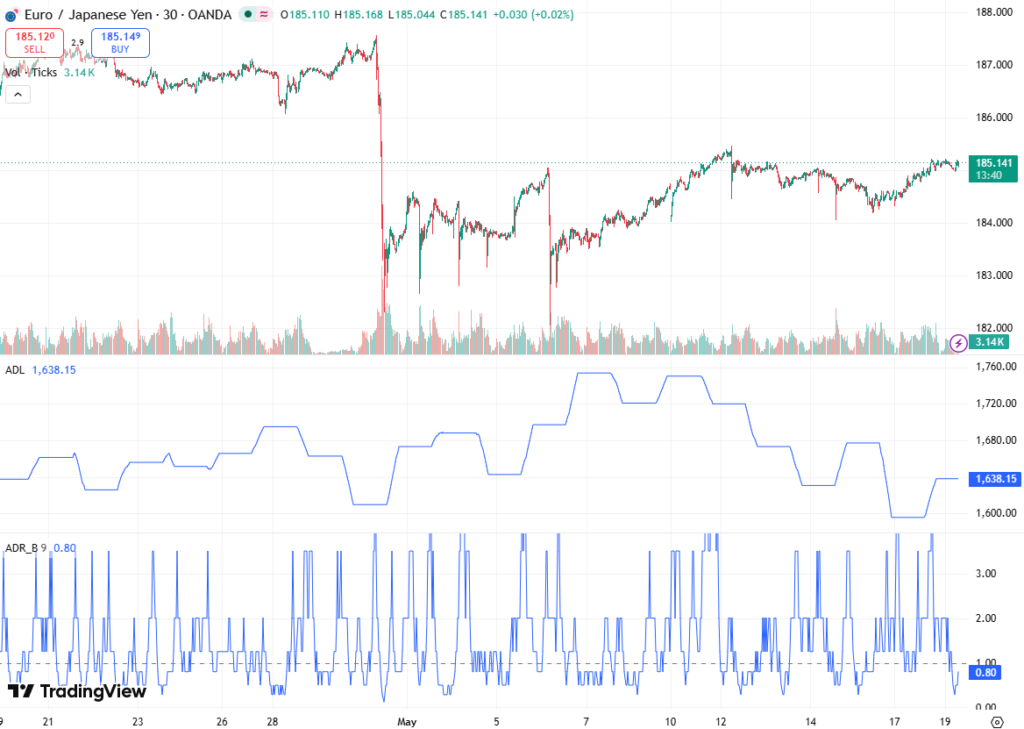
From a technical standpoint, the EUR/JPY pair faces key support near 184.50, with resistance at 186.20, reflecting the recent trading range. Short-term momentum indicators suggest limited upside unless the Euro benefits from a clear signal of further ECB tightening or a resolution of geopolitical tensions. The relative strength index (RSI) currently hovers around 48, indicating a neutral position with potential for continued consolidation.
The interest rate spread between the Eurozone and Japan remains a crucial determinant. The expected 25-bps ECB rate increase increases the yield advantage of holding Euros, yet geopolitical risk and global market sentiment may cap sustained Euro strength. Market participants are advised to monitor weekly Eurozone inflation data, Japanese industrial production, and trade figures for potential catalysts.
Conclusion
The EUR/JPY currency pair is navigating a complex environment characterized by Euro weakness, ECB hawkishness, and Japanese economic resilience. The Euro remains pressured by geopolitical uncertainty and ongoing inflation concerns, while the Japanese Yen has been supported by strong GDP growth, stable industrial activity, and moderate inflation.
Near-term movements in EUR/JPY will likely be driven by the interplay of monetary policy expectations, interest rate differentials, and risk sentiment, with technical support and resistance levels guiding short-term trading strategies.
Investors should maintain vigilance over both macroeconomic releases and geopolitical developments, as these factors continue to dictate the cross-currency dynamics in a volatile market environment.