
The USD/JPY pair continues to attract buyers for the seventh consecutive day, demonstrating a persistent bullish bias in the near term. Currently trading near 159.00, the pair has reached its highest level in nearly three weeks, reflecting sustained demand for the US Dollar (USD) amid a backdrop of geopolitical uncertainty and monetary policy expectations. Taurus Partners’ brokers offer an in-depth analysis of this subject in their latest article.
USD Regains Traction Amid Geopolitical Tensions
The US Dollar is regaining positive traction as global markets digest a series of geopolitical risks, particularly tensions in the Middle East. These uncertainties are fostering a risk-off environment, which traditionally benefits the USD as a safe-haven currency.
Meanwhile, speculation regarding the Federal Reserve (Fed) rate hike remains a key factor supporting the USD/JPY pair. Traders are increasingly pricing in higher interest rates by the end of the year, fueling bullish sentiment in USD-denominated assets.
Technical Outlook: Bulls Maintain Control
From a technical perspective, USD/JPY maintains a bullish near-term bias as long as it stays above the 158.55 confluence, which combines the 200-period Simple Moving Average (SMA) on the 4-hour chart with the 61.8% Fibonacci retracement level of the April–May decline.
Momentum indicators provide nuanced insights into the current market conditions. The Relative Strength Index (RSI 14) sits at 73.34, suggesting the pair is in overbought territory and hinting at stretched upside conditions. Meanwhile, the Moving Average Convergence Divergence (MACD) has slightly slipped into negative territory, indicating that upward momentum may be slowing despite the positive price action.
Resistance Levels: Eyes on 159.49 and Beyond
Traders should note key resistance levels on the upside. The 78.6% Fibonacci retracement at 159.49 serves as an immediate barrier, while the psychological 160.00 mark presents a significant challenge for bullish participants. If momentum persists, the pair could test the cycle high near 160.72, signaling a potential extension of the recent bullish trend.
Given the overbought RSI, short-term traders may anticipate consolidation or minor pullbacks before any sustained break above 160.00. This scenario would require a renewed surge in USD demand, possibly triggered by escalating geopolitical risks or a more hawkish Fed outlook.
Support Levels: Key Floors to Watch
On the downside, the 158.55 confluence remains the first line of defense for the bulls. A break below this level could expose the 50% retracement at 157.86, followed by additional support at 157.18 and 156.35, before approaching the broader structural floor near 154.99.

Traders should closely monitor these support zones, as they may offer potential buying opportunities if the market undergoes a temporary correction. The interplay between geopolitical events and domestic economic data will likely dictate the strength of these support levels in the near term.
Economic and Geopolitical Drivers
Despite positive US economic data, including robust Q1 GDP figures, global risks continue to weigh heavily on currency markets. The Middle East crisis remains a central concern, affecting investor sentiment and risk appetite. This environment is beneficial for the USD while undermining the JPY, which is often influenced by safe-haven flows during periods of global instability.
Additionally, market speculation about Fed policy adjustments continues to underpin USD strength. Any hints of accelerated rate hikes could act as a catalyst for further USD/JPY gains, whereas signs of easing geopolitical tensions or stabilization in oil prices may shift sentiment temporarily in favor of the JPY.
Trading Strategy Considerations
For traders and investors, the USD/JPY pair presents a mix of opportunities and risks. Short-term participants should consider the resistance and support levels mentioned above while staying alert to news flow on geopolitical tensions and central bank policy signals.
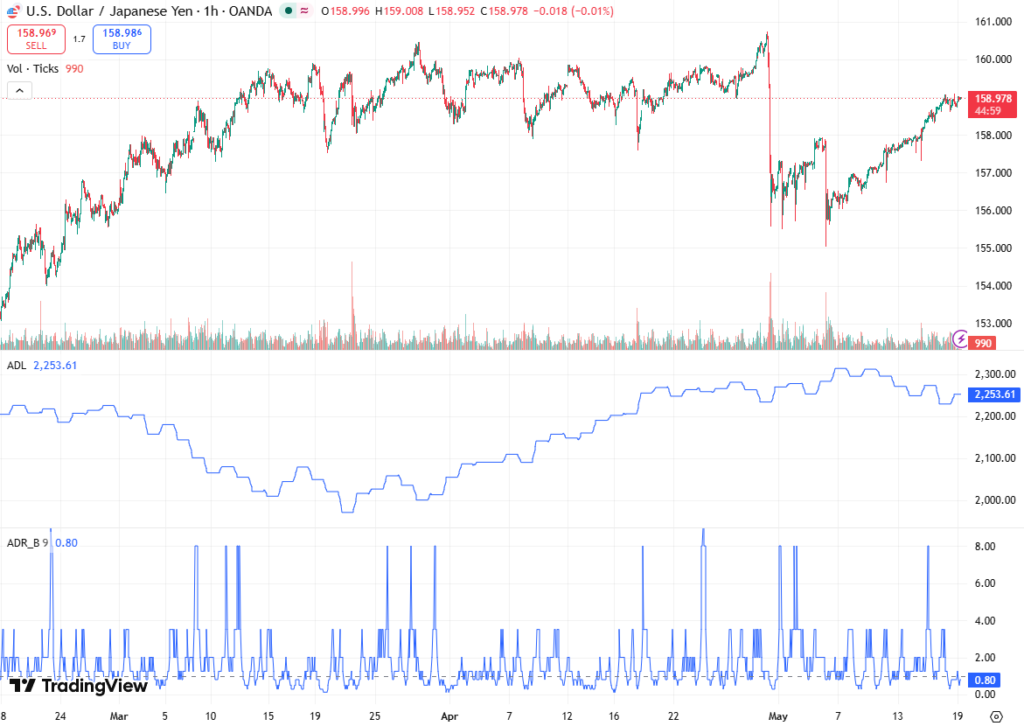
The bullish near-term bias remains intact, but the overbought momentum indicators suggest a cautious approach. Swing traders may prefer to wait for pullbacks near support levels before entering long positions, while aggressive bulls could aim for breakouts above 160.00, targeting cycle highs.
Conclusion
In summary, USD/JPY is holding near 159.00, marking its highest level in almost three weeks, driven by sustained USD demand, geopolitical uncertainties, and Fed rate hike expectations. While technical indicators show signs of overbought conditions, the pair retains a positive bias above 158.55, with immediate resistance at 159.49 and potential upside toward 160.00 and beyond.
On the downside, support zones at 158.55, 157.86, and 157.18 offer potential entry points for traders anticipating pullbacks, while the broader floor near 154.99 remains the key structural support.
Ultimately, USD/JPY price action will continue to be shaped by the interplay of global risk sentiment, Fed policy expectations, and economic data, offering strategic trading opportunities for both short-term and medium-term participants in the forex market.