

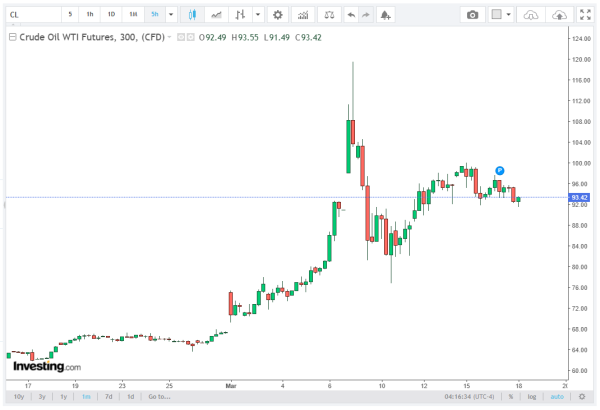
West Texas Intermediate (WTI) Crude Oil prices are experiencing renewed selling pressure, slipping below the $93.00 threshold as markets remain cautious amid a complex mix of geopolitical risks and macroeconomic factors. The brokers at Taurus Partners present a well-structured and informative breakdown of this topic in this article.
Despite an earlier attempt to sustain modest gains, the commodity faces fresh supply-driven pressures during the Asian trading session, limiting its upside momentum. The current price action underscores the delicate balance between inventory-driven supply dynamics, global geopolitical tensions, and monetary policy expectations.
Asian Session Sees Renewed Selling Pressure
During the Asian session on Wednesday, WTI crude attracted fresh sellers, as market participants reacted to both domestic inventory reports and lingering concerns about global oil demand. Prices fell over 2.5%, maintaining proximity to weekly lows recorded earlier in the week. Analysts attribute the slide in part to data from the American Petroleum Institute (API), which indicated a 6.56 million-barrel increase in US crude inventories for the week ending March 13.
The built-in inventories signal an abundance of supply in the market, prompting short-term traders to lighten positions. However, market observers note that the downside potential appears limited, as broader geopolitical uncertainties continue to underpin WTI support levels. The technical landscape shows that while the $93.00 level is psychologically significant, immediate resistance remains near $95.00, where sellers previously capped intraday rallies.
Middle East Tensions Provide Underlying Support
While supply factors pressure WTI, escalating geopolitical tensions in the Middle East offer a countervailing force that could limit further losses. The ongoing US-Israel conflict with Iran, now in its third week, has shown no meaningful signs of de-escalation. Notably, a senior Iranian official confirmed that Iran’s new supreme leader rejected de-escalation offers mediated by regional actors.
The Strait of Hormuz, a strategic chokepoint that handles roughly 20% of global oil shipments, remains a focal point of concern. Temporary closures or disruptions in this region could exacerbate supply shortages and trigger upward pressure on crude prices. Recent US military operations along Iran’s coastline, including targeted strikes near the Strait, alongside the assassination of top Iranian security figures, have further elevated geopolitical risk premiums for WTI.
Market participants are closely watching statements from Iranian officials. Army chief Amir Hatami warned that Tehran’s response to recent assassinations would be decisive, highlighting the risk of further military escalation. Such developments can act as a tailwind for crude oil, preventing prices from falling sharply even amid inventory-driven headwinds.
USD Strength Caps Oil Gains
Despite geopolitical concerns, WTI’s upside remains constrained due to the strength of the US Dollar (USD). Recent shifts in market expectations have reduced bets for additional Federal Reserve (Fed) rate cuts, thereby underpinning the USD. A firmer dollar tends to make dollar-denominated commodities more expensive for foreign buyers, indirectly capping gains for crude oil.
Technically, the WTI/USD relationship has played a critical role in short-term price dynamics. Strong USD momentum combined with lingering global supply abundance implies that any rebound in crude prices may face resistance near prior highs, particularly around the $95–$96 per barrel range. Market strategists recommend caution, suggesting that traders weigh geopolitical catalysts against macroeconomic headwinds before committing to long positions.
Market Reaction and Sentiment
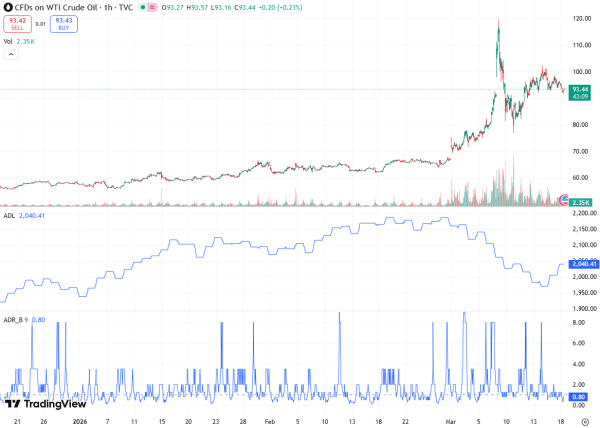
Current price action indicates that the market has largely priced in geopolitical tensions. While WTI remains volatile, with sudden intraday swings driven by news from the Middle East, overall sentiment reflects a risk-aware approach. Traders are balancing the bullish potential stemming from supply disruptions against bearish pressures from US crude inventory builds and a resilient USD.
Technical indicators show that WTI is flirting with support levels near $92.50–$93.00, which could act as a floor for short-term declines. Meanwhile, resistance continues to form in the mid-$90s, creating a range-bound environment for traders to monitor. Investors are also keeping an eye on upcoming inventory data, Middle East developments, and Fed communications, which could prompt sharp intraday reversals.
Outlook for the Week
Looking ahead, WTI crude oil is expected to trade within a narrow range, influenced by geopolitical volatility and macro factors. Analysts believe that while fresh selling may persist during certain sessions, further declines are likely limited unless unexpected supply shocks or economic data surprises emerge.
Overall, while WTI struggles to sustain gains in the short term, geopolitical tensions provide a buffer against sharp declines, offering opportunities for risk-managed trades. Traders are advised to maintain caution, given the complex interplay between supply dynamics, geopolitical risk, and monetary policy expectations.
Conclusion
WTI Crude Oil’s recent drop below $93.00 reflects a mix of inventory-driven selling and a strong USD, yet escalating Middle East tensions act as a partial safety net for the commodity. As the market navigates these overlapping forces, volatility remains elevated, and short-term price swings will likely dominate until clearer signals emerge on both geopolitical and macroeconomic fronts.